Waste Shipment Regulation
What’s changing for you
is an initiative of Valipac
What’s changing for you
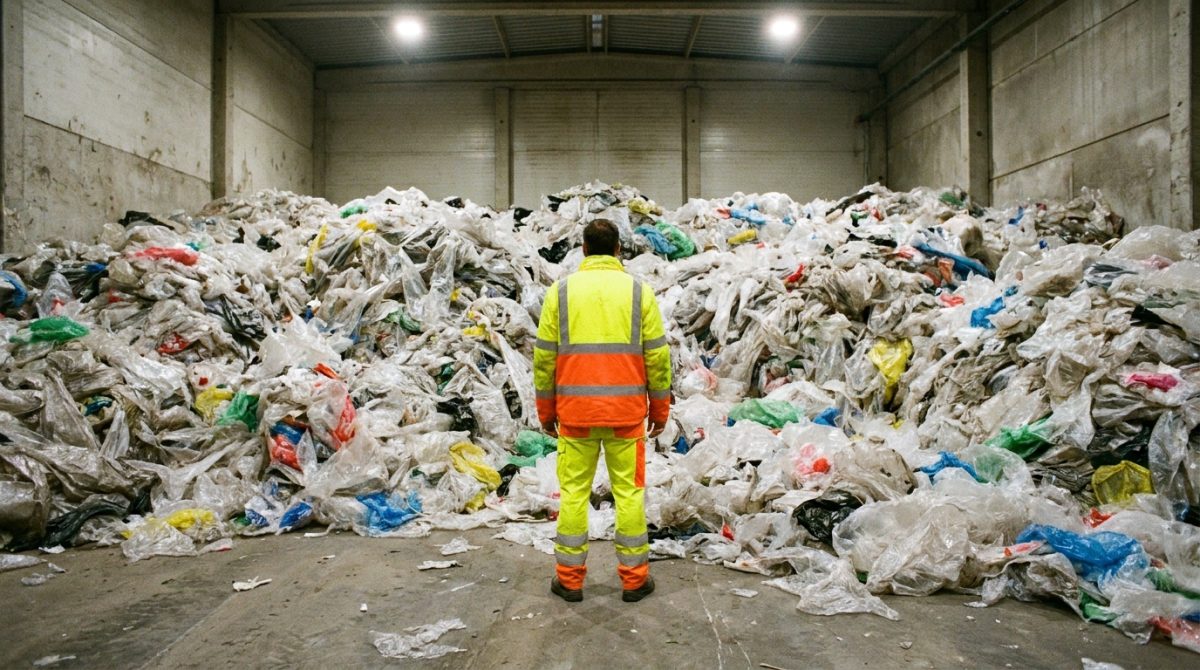
From 21 November 2026, the European Union will ban the export of non-hazardous plastic waste to non-OECD countries and significantly tighten controls on exports to OECD countries.
However, today, around 58% of commercial and industrial plastic packaging waste collected in Belgium is recycled outside Europe, with a significant proportion going to Asia. This reliance on external outlets will come to an abrupt end, severely limiting the sector’s room for manoeuvre.
A large proportion of these waste streams will therefore have to be processed in Europe, even though recycling capacities are already under strain (high energy costs, fragile profitability, idle production lines).
This increased pressure risks undermining the system’s overall balance: meeting your legal recycling targets whilst keeping costs under control is becoming significantly more complex.
1. Your legal recycling targets will be harder to meet
You will still be subject to high targets for plastic (55%).
2. Recycling will become more expensive
Less export and more processing within Europe will lead to higher costs, at a time when virgin plastic is often still cheaper.
3. Your Valipac reporting is changing
From 2027, you will need to report your plastics in greater detail, with differentiated fees reflecting the reality of recycling in Europe.
Against a backdrop where the imminent ban on exporting plastic waste to non-OECD countries is putting pressure on the collection and recycling of certain commercial and industrial packaging streams, Valipac has taken the initiative by seeking recycling partners within OECD member countries that have the necessary capacity to process these complex streams.
Thanks to this agreement, the recycling capacity required to process 6,000 tonnes of big bags will be secured in order to transform this waste into plastic pellets, which will then be reintroduced into new industrial applications.
From 2027, differentiated fees will fund a more robust local recycling system. The aim is to avoid market bottlenecks and maintain an effective and economically sustainable collective solution for your packaging waste.
The level of detail in plastic reporting will evolve to include eight distinct categories.
The fees for 2027 have not yet been finalised, but for certain types of plastic, the cost could in future be two to three times higher.
Your commercial and industrial plastic packaging: now in 8 categories
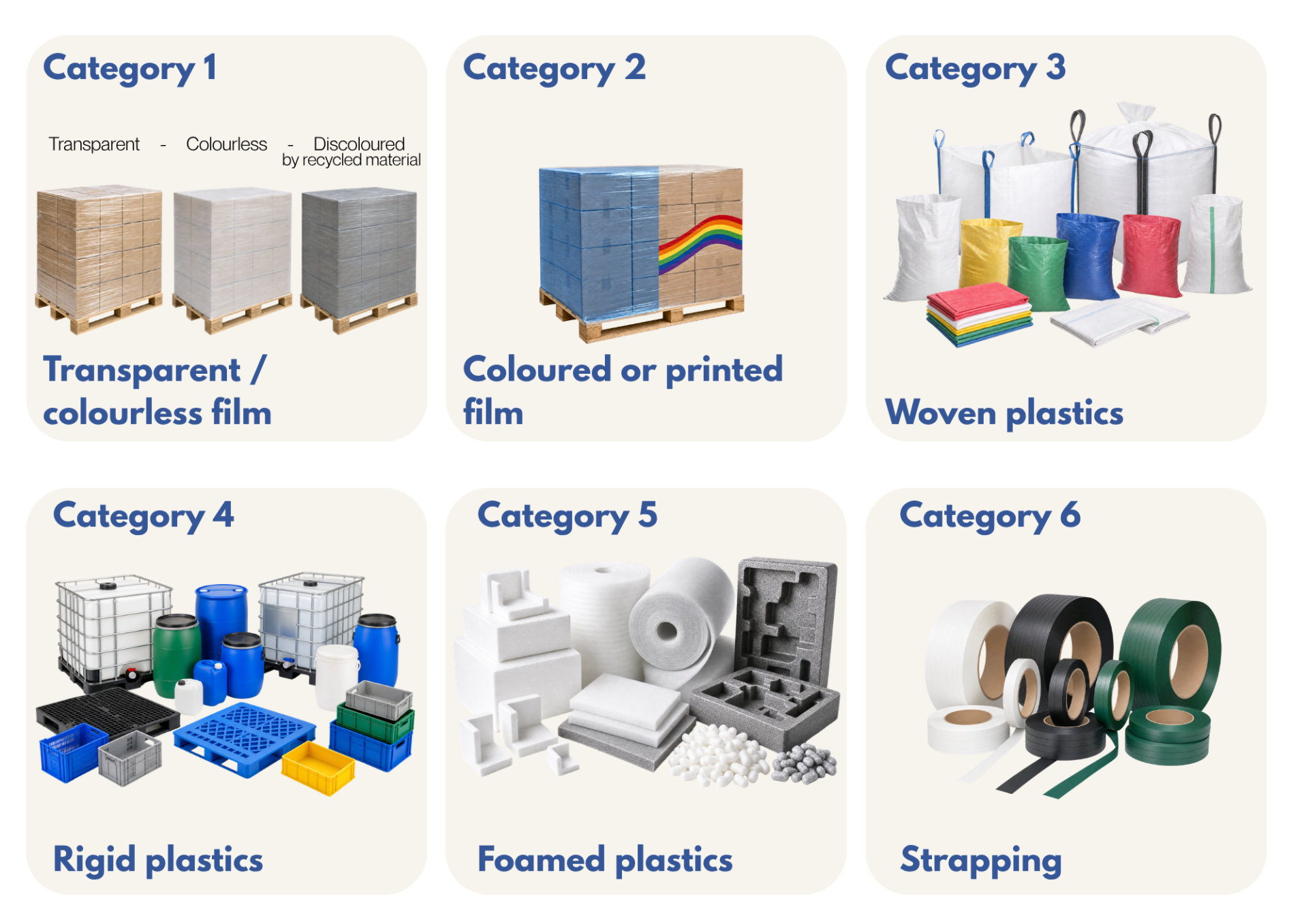
The breakdown in 8 categories applies to the 2026 reporting; please note that a different fee will be applied for each category (deposit for 2027)
Most common polymers: PE, PP.
Provided that all of the following conditions are met:
Most common polymer: PE, PP.
All films that do not meet the criteria for Category 1 fall under this category.
This includes, amongst others:
Most common polymers: PP, PET.
All plastic packaging made from strands interwoven in a woven pattern. Examples include woven sacks or big bags made from PP, PET or PVC.
Most common polymers: PE, PP, PET.
All plastic packaging that retains its shape regardless of whether it is filled or not.
Most common polymers: PS, PE, PP, PU.
All plastic packaging that has been foamed during the production process, resulting in a cellular structure containing trapped gas. Examples include packaging made from EPS (expanded PS, e.g. Isomo), xPS (extruded PS), ePE (extruded PE).
Most common polymers: PP, PET.
These are the lashing straps made from PP or PET.
For everything that does not fit into Categories 1 to 6.
See underneath for the definition of non recyclable.
Fundamental principles of the recyclability of industrial plastic packaging – see the No Regret playbook.
The following are definitely not recyclable:
2. Certain inks and adhesives (maximum thresholds)
Often there is a threshold that must not be crossed
More than 3% by weight of PU or acrylate‑based adhesives
More than 5% by weight of EVOH barrier layer
3. Labels
Labels based on PVC or PVDC
✓ Opt for ‘recyclable’ plastics:
transparent, single-material films, which are easier to recycle and yield a higher return → lower recycling fees.
✓ Avoid complex plastics:
limit the use of colours, additives and multi-layered materials, as these will be more expensive to recycle due to their complexity.
✓ Use Valipac’s tools:
use the design4recycling guides and assessments to identify quick wins (simplification, etc.).
✓ Plan ahead with your suppliers:
adapt your packaging now to meet future requirements (recyclability, recycled materials)